Universities offer students far more than a curriculum; yet too often, we assume students and families understand how academic learning, experiences beyond the classroom, skills development and career preparation fit together. Traditional course requirements must show students what they need to complete, but they rarely make clear why those experiences matter, what students will learn from them, or how they build toward life after graduation.
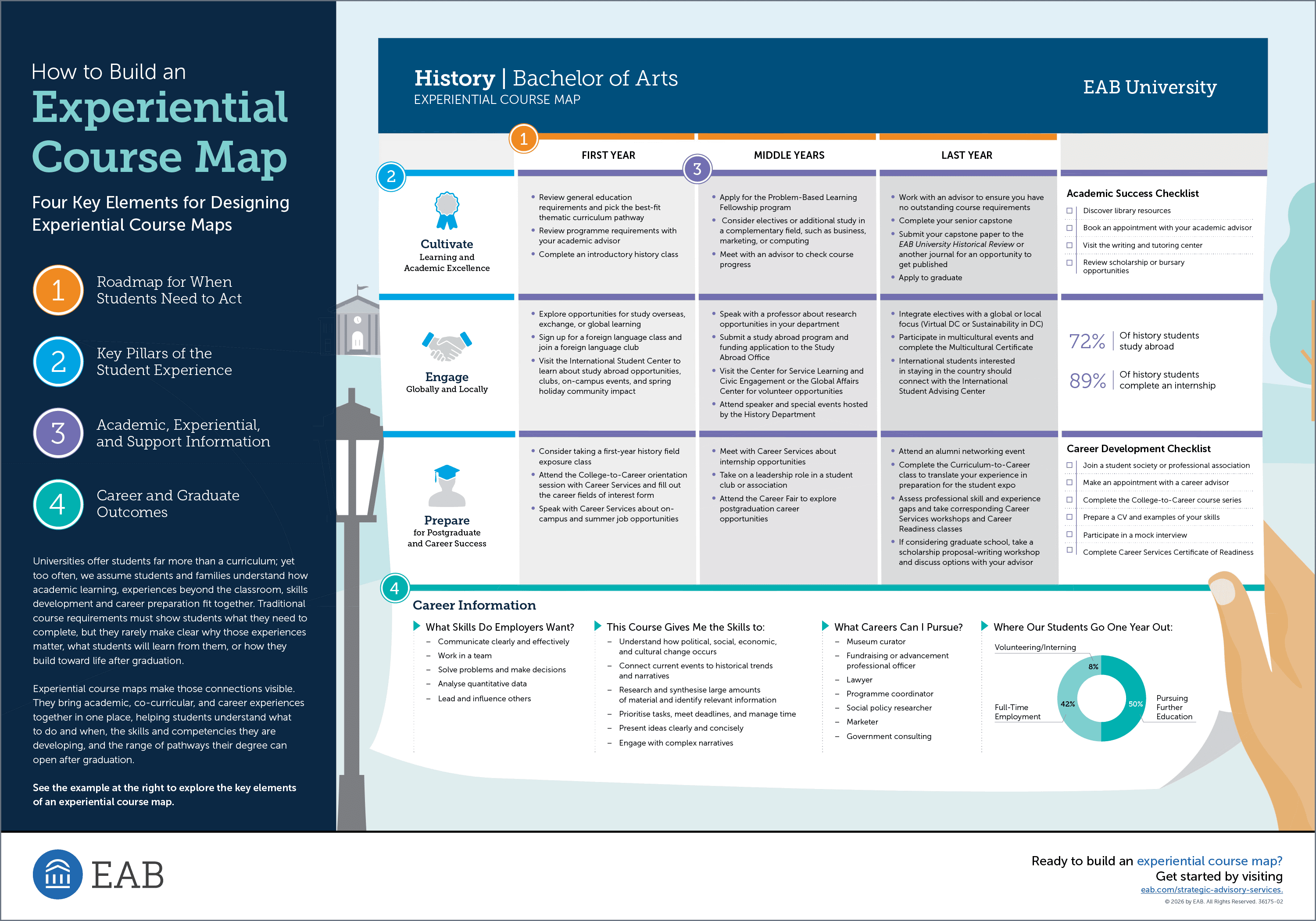
Experiential course maps make those connections visible. They bring academic, co-curricular, and career experiences together in one place, helping students understand what to do and when, the skills and competencies they are developing, and the range of pathways their degree can open after graduation.
See the example below to explore the key elements of an experiential course map.
Let’s Talk About Your Priorities
Connect with a Strategic Advisory Services expert to explore how EAB can help you drive forward your leadership team’s most important initiatives.
More Resources

Analysis of Student-Centric Structures and Practices Among Institutions Globally

Student Experience and Well-being Resource Center