How to identify new recruitment markets without starting from scratch
Enrollment teams are being asked to find growth in a market where growth is getting harder to come by. For many institutions, that means looking beyond the regions, schools, and student segments that have historically filled the funnel.
But expanding into new markets can feel like a high-stakes bet, especially when budgets are tight, teams are stretched, and every decision needs a clear rationale.
After working in enrollment leadership for more than a decade, I’ve found that the strongest recruitment strategies often build on existing institutional knowledge and performance data. Most enrollment teams already use historical inquiry, application, and enrollment trends to guide prospect purchasing and market planning. The next step is adding more context to help teams decide where to maintain focus, where to test, and where to look more closely.
This blog post will explore how teams can evaluate emerging opportunities and make more informed investment decisions.
Why new market strategy often stalls
New market planning often starts with a familiar list:
- A few promising states
- Metro areas where peers are active
- High schools with strong reputations
- Student segments tied to key programs
These are all reasonable starting points, but most teams don’t have the time or budget to test them all in a meaningful way.
Historical data remains an essential starting point for recruitment planning. Inquiry, application, and enrollment trends help teams understand where they’ve built awareness, where they’ve seen consistent results, and where continued investment may make sense. In many cases, this is already how teams identify areas to purchase and prioritize outreach. Here’s how Appily helps some partners apply historical data to recruitment planning:
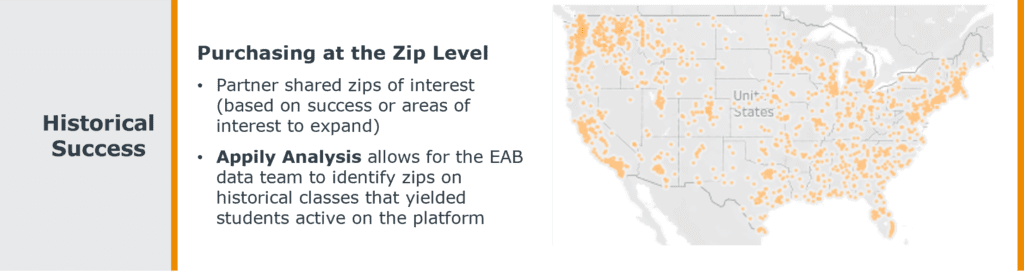
Historical data becomes even more useful when it’s paired with additional context about student interest and market behavior. A market with low past volume may be a poor fit, or it may simply be a place where your team has not yet had a strong enough presence to capture demand.
Teams should still rely on historical data. The risk comes when historical performance becomes the only lens for deciding where to invest next. In that case, familiar markets can look safer than they really are, while emerging markets become easier to overlook.
Look for evidence of existing demand
Instead of starting with geography, start with evidence of fit.
Students leave useful indicators throughout the college search process: types of institutions they consider, which schools they engage with, how their academic interests align with available programs, and where they appear open to colleges like yours. Those indicators can help narrow a broad set of possible markets into a more focused list worth discussing, testing, or monitoring.
For example, your team could look for:
- Markets where students are engaging with peer or competitor institutions
- Regions where similar institutions are seeing success
- Academic interests that align with your strongest programs
- Student segments that engage earlier or more consistently
- Areas where you’ve seen early traction without sustained investment
These areas may not guarantee success, but they provide a stronger starting point for making decisions, and they can result in better market efficiency and potential access to students considering transfer pathways.
They also help teams right-size their approach. Not every market requires a major investment. One might call for targeted digital outreach, another could fit into existing travel plans, and a third may simply belong on a watch list until stronger signals emerge. The goal is to reduce the number of markets that feel entirely unknown before your team decides where to act.
What peer institution interest can reveal
Peer institution interest is one useful signal because it answers a critical question: are students in this market already considering colleges like yours?
A large market may have plenty of students, but that doesn’t mean it’s a strong fit. A smaller or less obvious region may have fewer students overall, but a higher concentration of students who are open to your type of institution.
A better question is, “Where are students already open to institutions like ours?” If students in a market are actively engaging with similar institutions, your team won’t feel as though they’re starting from zero. Here’s how Appily helps some partners explore peer prospects:
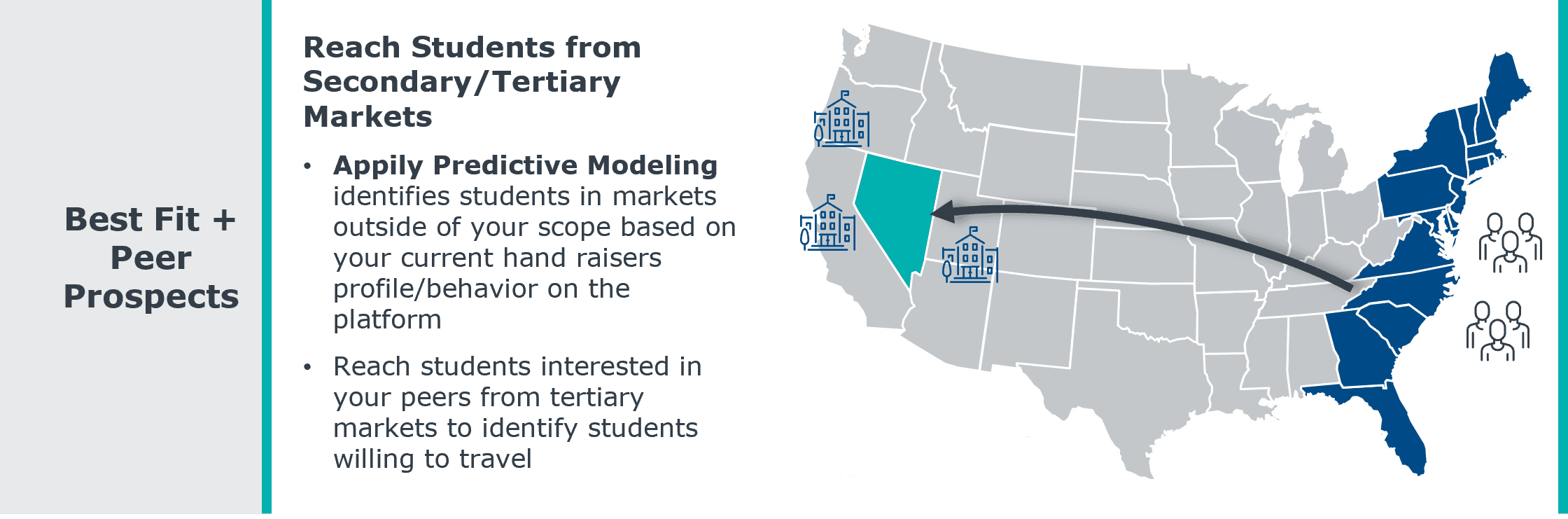
This approach also prevents overcorrection. When traditional markets underperform, it’s tempting to chase something new, but new doesn’t always mean better. A market is worth exploring when there is a clear connection between student behavior, institutional fit, and your team’s ability to act.
A tale of two markets
As you evaluate both historical performance and current student behavior, contrasting market patterns can help clarify where to maintain investment and where to explore new opportunities. Here’s how this might show up in your market analysis:
| Market A: reliable but no longer growing | Market B: smaller but signaling growth |
|---|---|
|
This is a market your team knows well. It has produced steady inquiry volume for years, and historical data makes it easy to justify continued investment. But when you look closer, student engagement has started to level off. Students are still inquiring, but they are not engaging as consistently or moving through the funnel with the same momentum.
|
This market has not produced as many inquiries for your institution, so it may not rise to the top based on historical data alone. But additional context tells a more interesting story. Students in this market are showing interest in similar institutions, exploring related academic programs, or appearing in datasets that suggest openness to your type of institution.
|
Where Appily Peer Prospects can help
For many enrollment teams, prospect purchasing already starts with historical data. Past inquiry, application, and enrollment trends can help identify markets where your institution has built awareness and where continued outreach is likely to matter.
Appily’s Peer Prospects can supplement that strategy by helping your team identify students who have expressed interest in peer institutions. These prospects can add a new layer to your current audience strategy by helping you reach students who may already be open to colleges like yours, even if they have not yet entered your funnel.
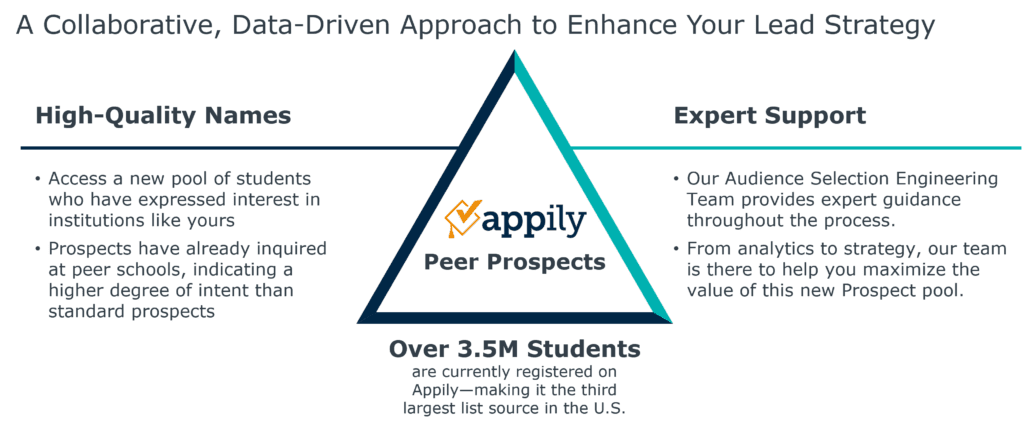
Peer Prospects can build on your current prospect strategy by helping your team refine and expand the audiences you already purchase. Your team can continue investing in proven markets while using peer-interest data to strengthen outreach to students who may be a strong fit based on the institutions they are already considering.
For teams looking more broadly at market discovery, EAB can also use Appily insights and Naviance insights to help identify where students are actively researching colleges and where new opportunities may be taking shape. Together, these approaches can help teams connect historical performance, peer interest, and broader student search behavior into a more disciplined recruitment strategy.
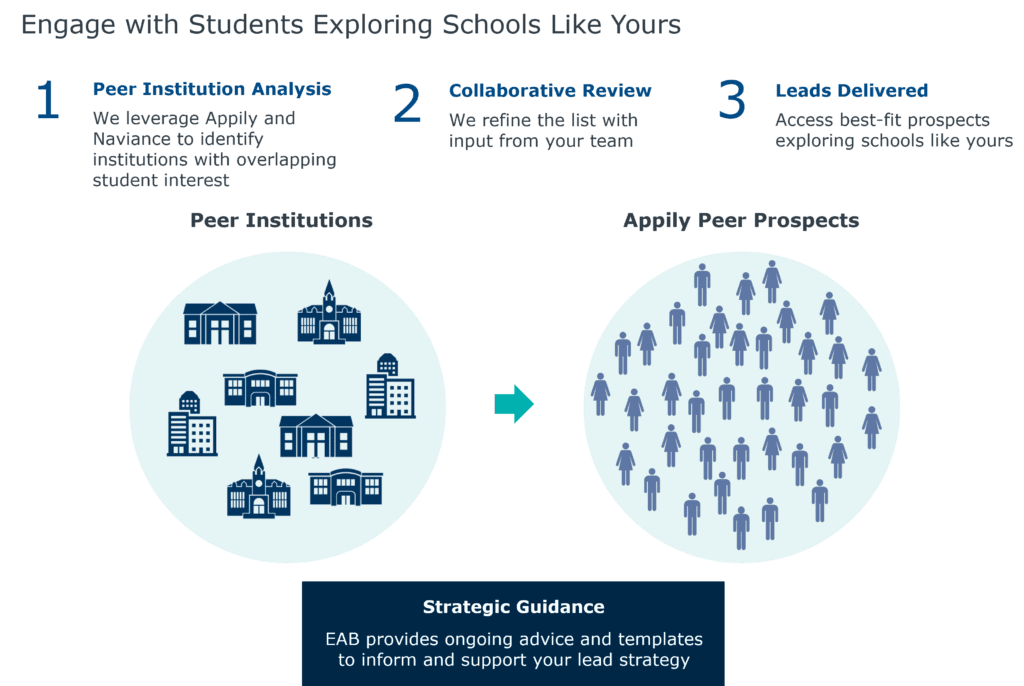
A more focused approach to finding new markets
Expanding into new recruitment markets will always involve some risk. Student behavior, competitor strategies, and institutional priorities can all change from one cycle to the next.
But teams can make smarter bets by looking for evidence of fit before committing significant resources. Historical performance, peer institution interest, student preferences, and broader search behavior can all help clarify where opportunity may already be taking shape.
Under pressure to grow, that clarity really matters. It helps avoid spreading resources too thin, creates a more disciplined approach to testing and learning, and moves your team from broad possibility to a clearer reason to invest.

More Blogs

Students no longer search like they used to

AI search is reshaping brand and enrollment strategy. Is your institution ready?