How to turn parents into stronger recruitment allies
Most enrollment leaders assume that parents play a key role in their students’ college search, from the decision to pursue higher education to matriculation. And they are right. But fewer appreciate the full extent of parent influence and the particular roles that they play.
Understanding those things helps you fully mobilize parents as powerful recruitment allies. This is one reason EAB puts so much work into thinking about parents, including their concerns and the specifics of how they engage in their students’ search process.
The cornerstone of that effort is a recurring national parent survey, examining a wide range of questions, from what worries them most about their students’ college-going to what makes a school “worth the cost.”

This post offers highlights from our most recent survey.
Parents are very hands-on
If you want to focus on just one lesson from the survey findings, a good choice would be the fact that parents are very hands-on with their students’ college search; around three quarters report being either “very” or “extremely” involved. And, while the degree of involvement varies somewhat by demographic (wealthier parents are more involved), the level of engagement is high across all demographics, including among parents of first-generation students. A representative indication of parents’ close involvement is the fact that more than 80% report searching for information on colleges on their students’ behalf.
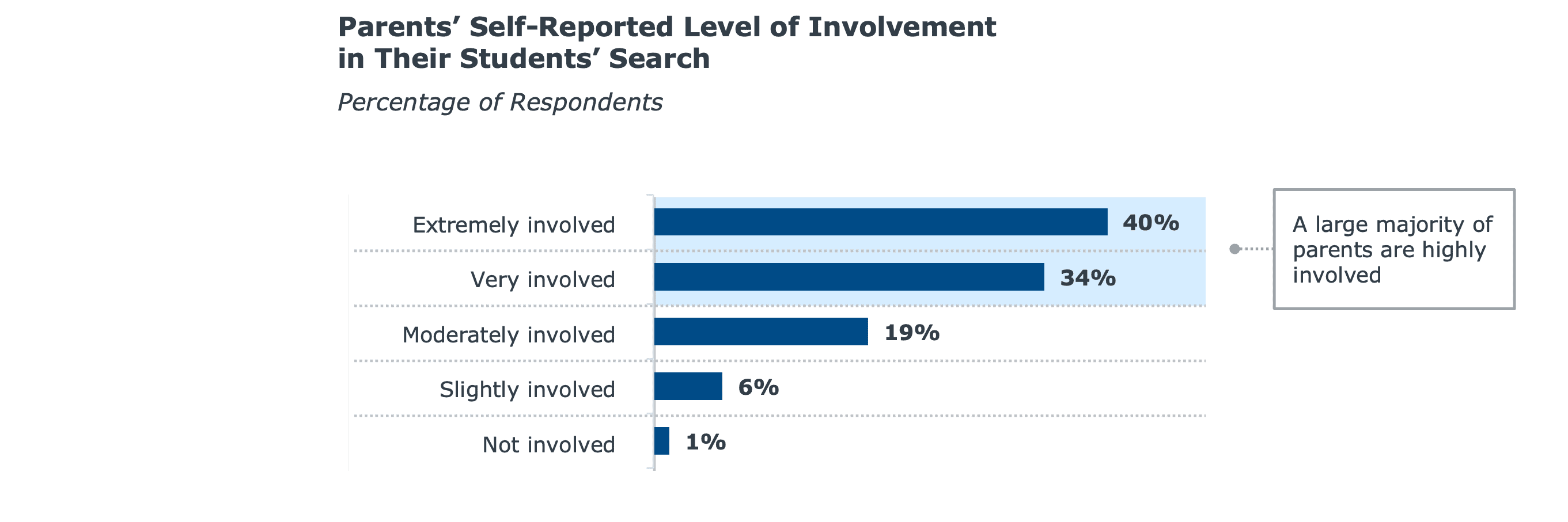
This finding matters to enrollment teams insofar as it reveals a powerful avenue of influence. Parents are a direct line to students and are also critical decision influencers in their own right; both facts make them an important audience for your recruitment outreach.
Cost is a persistent top-of-mind issue
A second key takeaway from our survey is that parents’ concerns have remained remarkably consistent over time; what most preoccupied them in our 2022 survey is still top of mind for them today. This is good news for enrollment teams. As long as you’ve been careful to focus your past parent communications on things that matter most to them, you don’t need to reinvent the wheel.
Topping the list of priorities is, by a wide margin, cost, in its various manifestations: how much will need to be spent on college, the amount of debt that may be required, and the availability of financial aid, for example. Relatedly, the top two decisions where parents report having the greatest influence concern college finances, and the total amount to be spent is the most common flashpoint between students and parents.
A growing focus on the aid award
While largely consistent over time, parent views are not static; they do change in important ways.
One key development across the past four years has been the increasingly central role that the financial aid award plays in parents’ understanding of value; the percentage citing it as a critical component of a school’s value proposition showed a proportional increase of 23% between 2022 and 2026 (26% versus 32%). While the survey does not tell us what’s driving the change, one possible explanation is that schools are doing a better job of communicating aid awards to families, following long-standing advice from EAB and other thought leaders in the enrollment space. Another is that parents are becoming more price sensitive and are giving competing schools’ aid awards an accordingly greater level of scrutiny. (The two scenarios are not mutually exclusive.)
Increasing concern over students’ ability to thrive
Because affordability looms so large among parent concerns, it may cause you to overlook other things that matter a lot to them. A great example is their students’ well-being. While two of parents’ top-three college-going worries are related to finances and affordability, once you look beyond that, the list is dominated by issues related to their students’ ability to thrive once they arrive on campus. Of special note here is growing parent concern over their students’ mental health and wellness.
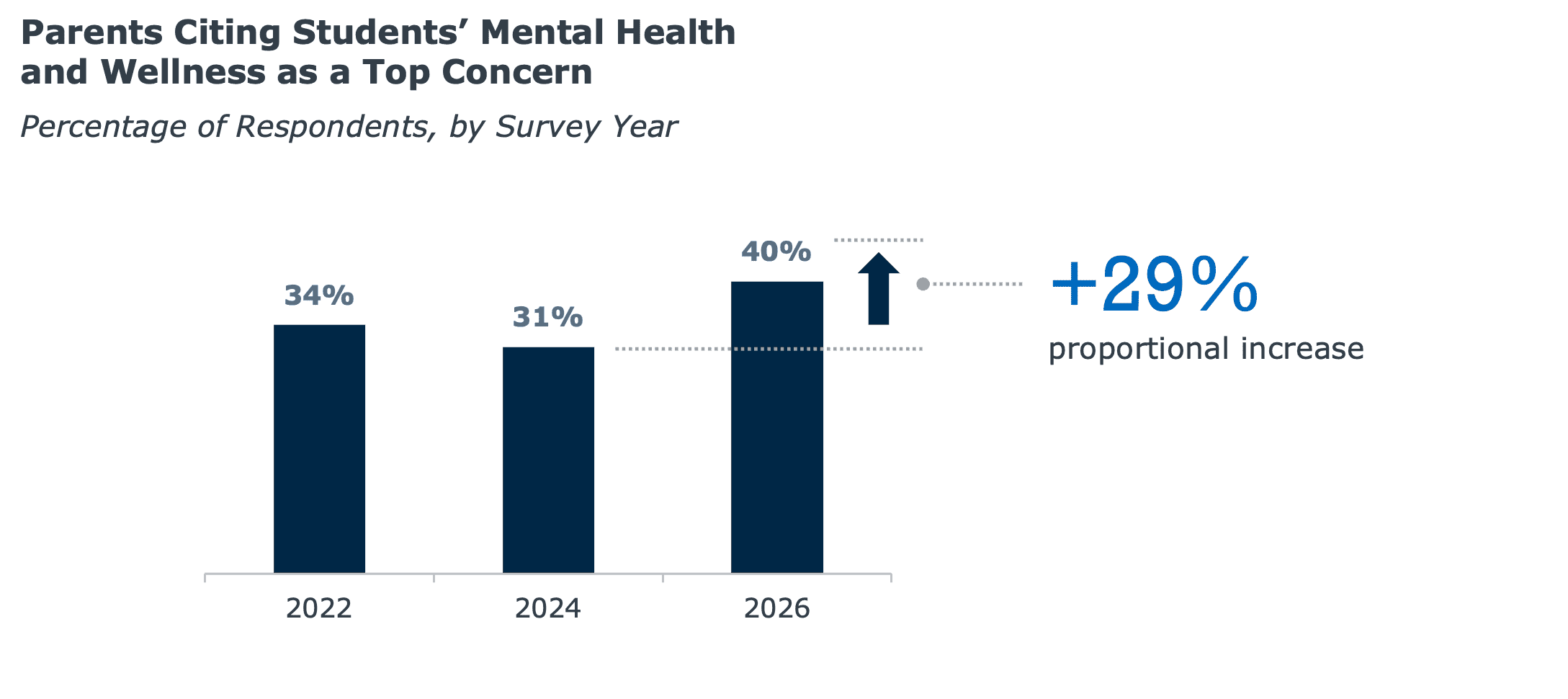
Other findings from the survey reinforce the idea that student well-being is on parents’ minds. For example, parents report high rates of concern among their students regarding their ability to succeed after enrolling and their ability to integrate socially on campus. These findings are also consistent with what we’ve seen in EAB student surveys and conclusions reached by other, non-EAB research examining today’s so-called “anxious generation.”
Untapped potential
The main action point for enrollment leaders emerging from our survey is that most schools can and should be doing more to better engage parents.
Parents want to hear from you—more than 70% say schools should communicate with them directly. At the same time, a lot of parents are not currently getting what they need from colleges. Many report being either over- or under-contacted, and a minority report finding the information they’ve received either “very” or “extremely” helpful.
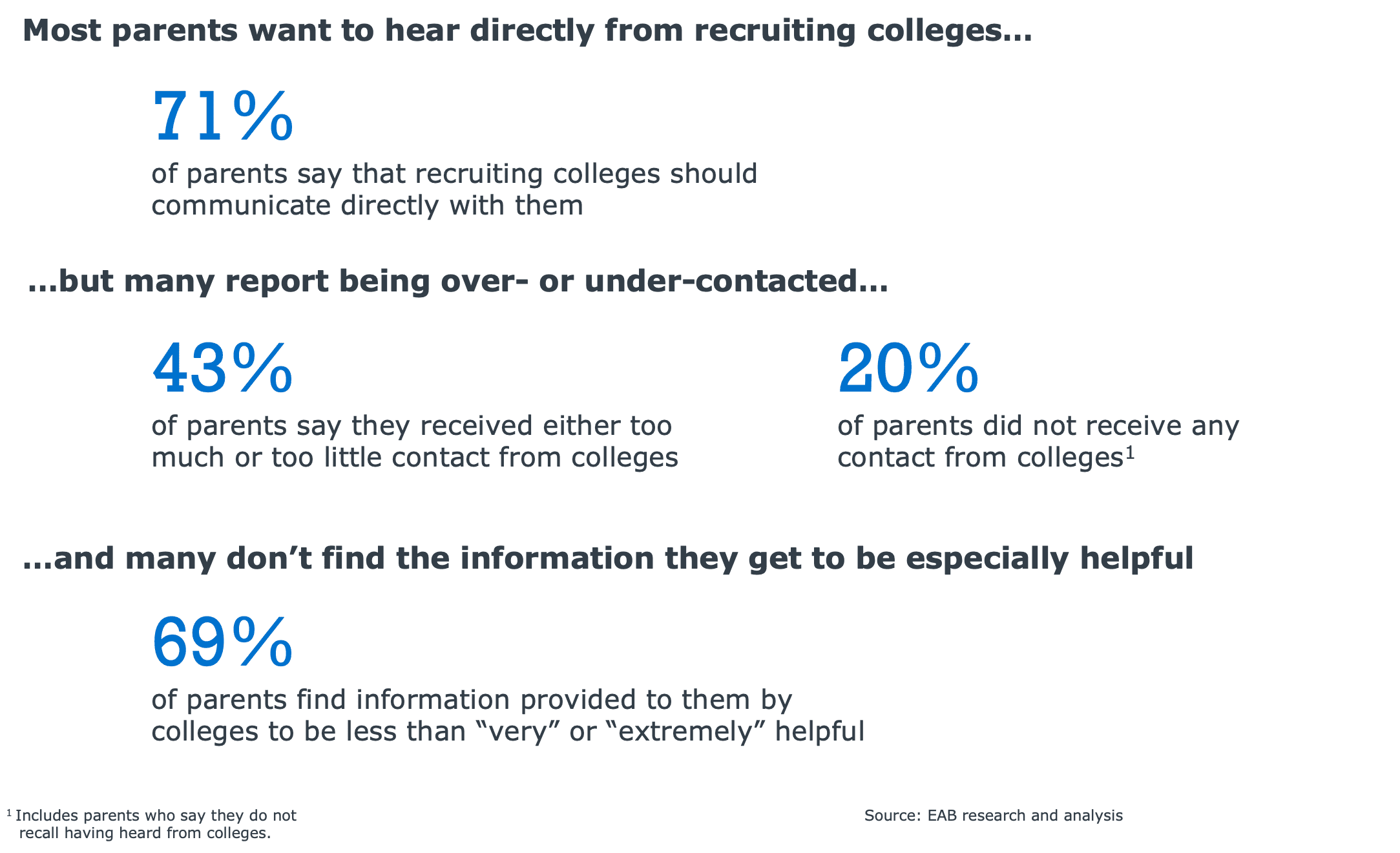
This state of affairs represents significant untapped potential. Rapidly evolving digital engagement channels have greatly expanded the toolkit at your disposal for identifying and reaching students and parents. Furthermore, research such as the survey I’ve been discussing in this post gives us a much deeper understanding of what matters most to parents and how, specifically, they engage with their students’ search—information that you can use to boost the impact of your outreach to them.
Benefit from our broader set of parent insights
The points discussed above are just highlights from the larger body of insight contained in the full report on the survey. I urge you to download it; the deep and broad understanding it will give you of today’s parents can inform every aspect of your strategy, with downstream benefit across all your recruitment efforts.

More Blogs

How to talk about college cost before families bring it to the holiday table

What we’ve learned from testing earlier yield engagement