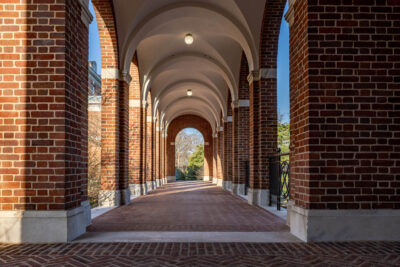
Should a student’s journey on campus be as challenging as Odysseus’ journey home?
-


TLDR
Students continue to struggle navigating college campuses. While institutions often add new programs to support the student, institutions rarely step back to assess and redesign the complex systems and processes that shape the student experience. I would love to work with you to understand the actual lived experiences of your students and then identify ways to streamline your processes and enhance human connection at critical milestones.
As a first-generation college student, I went to campus (eek, in 1996) with very little understanding of what I needed to do, outside of the classroom, to be successful. I applied to five schools including my “dream” school, dream because I loved their football team and my “safe” school, safe because it was a state school with a high acceptance rate. I ultimately picked an institution because it had the best residence halls of all the campuses I visited. My priorities, let’s just say, were not on ensuring I got the best ROI or that I would be guaranteed a job after graduation.
I excelled academically so I felt comfortable being in the classroom. But I did not know which questions I needed to ask to understand everything else that came with college –
- What types of financial aid are available and how do I avoid taking too many loans?
- How do I pick a major (at the time finding a career was less important, hence why I selected my undergraduate major)?
- What is a bursar?
- What are healthy eating habits (especially when there is a Taco Bell on campus and I could use my meal plan to order Dominos)?
- How do I balance a part-time job (I worked two jobs, at the same time, during college), class work, and a social life?
- What do I do when it is 3am on a random Wednesday in October and really miss home but am afraid to admit it?
- I feel like I do not fit in and can’t keep up…college is harder than I expected.
And I know I had it easy. Despite being first-gen and coming from a blue-collar, middle-class family, I had many privileges. Some of the greatest lessons my parents taught me were to be curious, to have initiative, and to know that it is ok to ask for help (except if I ever ran out of gas because I should have known better). Without knowing the word at the time, they taught me how to be resilient.
I do not recall ever seeing an advisor but do remember great conversations with my program faculty my junior and senior years (that could also be because I was a work-study student in the department). I graduated in 4 years with a mountain of student loans. The year I graduated is when the Mastercard “priceless” commercials were popular and we had a t-shirt made that included the total cost of our 4 year-degree (it was over $96K, in 2000) but that the memories and friendships we made were “priceless.” My college friends are still my best friends today; I do wish it cost significantly less to meet them though.
Fast forward 25 years, I never intended higher education to become my career and life’s (professional) passion, but it has, and the sector has improved since I started as an undergrad. But I do believe we may have over-corrected in some areas and continue to struggle in others as it relates to supporting the student journey – both inside and outside the classroom. (Note: I have been using the em dash for three decades and like the oxford comma, I will continue to use it).
My oldest son is a 2025 college graduate, but his college experience was very different because he was a D-1 student-athlete. I will hold his story for another time as I have many thoughts about that process and his experience. My daughter is about to enter her junior year in college, and my youngest son is going to be a junior in high school this fall. I have been in the throes of the college admissions and registration processes for the past several years as a parent. I have also watched my siblings, cousins, and friends traverse these windy, sometimes connected, often disconnected roads.
Why am I sharing all of this? In addition to being a higher education practitioner and a parent, I am also a higher education researcher. My doctoral research was based on a theoretical framework borrowed from economics – the theory of capitals, specifically cultural, social, and academic. Pierre Bourdieu was a sociologist who applied the traditional economic definitions to other disciplines and specifically discussed how an individual inherits or acquires “capitals” throughout life and how that directly influences an individual’s ability to improve their outcomes (e.g., economic and social mobility). Using Bourdieu’s model, I researched how capitals impact a student’s ability to be successful in college.
The concept of capitals is useful to understand how students navigate college – from recruitment through graduation. And to give the major lesson up front (well several paragraphs in), the student journey is not the same across student populations and it is an institution’s responsibility to streamline processes to meet the needs of the majority of students and then create purposeful, human-centered, touchpoints to support students who have not inherited the cultural capital or acquired the social capital to navigate these complex processes on their own.
Many institutions have embedded best practices, like First-Year Experience courses, One-Stop Offices, and Student Success Coaches (which are different than academic advisors which are different than faculty advisors). And yet, students still struggle. So, institutions offer extended orientation and onboarding programs and moved into hyper-personalization recruitment efforts to help students make more informed choices from the start. And yet, students still struggle. So, institutions curate parent and family-support programs and send newsletters to parents so that they can support their students from afar. And yet, students still struggle.
All of these are important practices that should continue and institutions need to go deeper into the organization to do the hard(er) work of removing barriers instead of just adding programming. Policy and process reviews and redesigns are arduous and no one’s favorite task (except for my former colleague, Neil, who loved to edit policies). Many policies and processes no longer serve the students that are walking onto our campuses in 2026. Our focus, over the past decade +, on making higher education accessible to all students was the absolute right focus, but all the work in making our campuses “student-ready” are certainly still works in progress.
Removing barriers and reducing friction, especially for marginalized student populations, is the important work that institutions need to be focusing on right now. But this too is a delicate balance because college campuses should also be a place where students can acquire those very important capitals that were mentioned earlier. Removing barriers should not mean free of challenging situations. Less friction should not mean friction-less. College campuses should be the (low risk) opportunity for students to develop the skills and build the muscles needed to forge a path through unknown areas with guideposts (academic/navigational capital) and networks of human connections (social capital). These skills are equally as important as the academic knowledge students are acquiring as both are needed to be successful in and navigate the “real world.”
So, how do we do this work? We need to get down to the system level (and I am not talking about the technology systems but those are important too. I am talking about the systems that are the invisible threads holding up our campuses) and then rebuild with a design-thinking (human-centered) approach. We ask students how they experience(d) our campuses. We stop assuming we “know” their journey and we also stop assuming we “know” how to fix it without understanding and observing their lived experiences (e.g., the “desired paths” stories out of UC Berkeley, Ohio State, Michigan State and others).
Our institutional policies and processes should be regularly reviewed and edited when needed. As institutions of higher learning, our commitment to continuous improvement should model the lifelong learning we encourage our students to follow – listen, learn, grow (as my parents taught me, stay curious, take initiative, and do not be afraid to ask for help).
Ready to do the work? Ready to uncover, assess, and redesign your policies and processes to support the student journey at your campus? Reach out to our team and let’s jump in….and we will be quicker and more efficient than Odysseus.
Ready to learn more?
Contact us today to explore how EAB Consulting can help you translate vision into measurable impact.

More Blogs

How to keep human connection at the center of your campus AI strategy

How institutions are teaching faculty and staff to speak institutional finances