How to improve student success in short-term credential programs
Workforce Pell’s arrival on July 1, 2026, marked another milestone in the evolution of short-term credentials, building on several years of rising enrollment in certificate programs from recent high school graduates seeking faster pathways into the workforce. Certificate enrollment has increased 28.3% since fall 2021, with much of that growth driven by younger learners, including a 17.8% increase in certificate awards among 18- to 20-year-olds. This rising demand for short-term credentials makes these programs an increasingly important part of community college enrollment strategy.
This raises an important question for institutional leaders: What does student success look like when learners are only on campus for a matter of weeks or months? Students enrolled in six- or 16-week programs don’t have the luxury of recovering from a difficult first semester. An unanswered admissions question, a delayed financial aid award, or a missed week of class can quickly derail their progress because the window to intervene is much smaller.
Yet many colleges still design admissions, onboarding, and student success processes around semester-length and degree-length journeys, leaving little time to identify challenges before short-term students fall off track. In this post, I’ll outline six ways community colleges can redesign the student journey for short-term learners, along with the technology capabilities that can help staff coordinate support and intervene quickly.
Workforce Pell Makes Student Success a Program Imperative
While Workforce Pell expands access to federal financial aid for eligible short-term workforce programs, it also establishes rigorous expectations for program quality and student outcomes. For community colleges launching or expanding Workforce Pell-eligible programs, enrolling students is only the first step. Colleges will also need to help those students persist, complete their programs, and successfully transition into the workforce to keep programs in good standing and deliver on the promise of short-term credentials.
To qualify, programs must:
- Prepare students for high-skill, high-wage, or in-demand occupations.
- Demonstrate that graduates’ earnings justify the cost of attendance.
- Achieve a 70% completion rate within 150% of the program’s intended length.
- Achieve a 70% job placement rate during the initial implementation period.
- Meet ongoing state review and approval requirements to maintain program eligibility.
Meeting these expectations will require community colleges to intentionally design the student journey around the pace of short-term credentials, ensuring students receive the guidance, support, and interventions they need while there is still time to make a difference.
Six Ways to Redesign the Student Journey for Short-Term Learners
Research on community college student success consistently shows that the earliest moments of a student journey have an outsized impact on whether they ultimately complete a credential. Students who build early momentum by entering a program of study, completing key milestones, and connecting with support services are far more likely to graduate.
For students in short-term credential programs, those same milestones unfold over weeks rather than semesters.
Here are six ways leaders can intentionally design every stage of the student journey:
-


Guide discovery and inquiry
Create a single admissions “front door” where all prospective students can explore programs, ask questions, and submit inquiries. Once students express interest in a short-term credential, guide them with a communication journey tailored to that pathway that helps them understand program length, career outcomes, funding opportunities, stackable credentials, and the next steps to enrollment.
-

Strengthen admissions and onboarding
Give short-term students the same high-quality onboarding experience as degree-seeking students, including a centralized enrollment hub, orientation, campus tours, and clear guidance on the advising, tutoring, financial, and other support services available throughout their program. Because many short-term students enroll close to the start of their program, onboarding should be easy to complete and reinforced through proactive reminders and personalized outreach.
-

Create earlier academic milestones
Replace semester-based checkpoints with milestones that reflect the pace of the program. Rather than waiting until midterms to identify students who are struggling, establish earlier checkpoints around attendance, first assignments, skills assessments, or other indicators that give staff time to intervene.
-

Equip faculty to raise concerns
Give faculty teaching in short-term programs a simple, consistent way to raise concerns about attendance, academic performance, or in-class engagement. Those concerns should trigger coordinated follow-up so students receive support while there is still time to change their trajectory.
-

Tailor advising and coordinated support
Ensure short-term students receive advising that matches the timeline of their program. Advisors should have the tools to identify concerns early, tailor outreach to key milestones in the student’s journey, coordinate referrals, and connect students with academic, financial, and personal support before small challenges become barriers to completion.
-

Measure student outcomes
Include short-term students in institutional dashboards so leaders can monitor onboarding progress, early alerts, support utilization, completion, and transitions into additional credentials or degree pathways. Understanding where students are succeeding and where they are falling off track helps colleges continuously improve both the student experience and program outcomes.
The student success strategy for short-term learners should be every bit as intentional as it is for degree-seeking students. Because these programs move so quickly, colleges need tools that help staff coordinate outreach, identify students who need support, and respond while there is still time to make a difference.
Investing in Technology That Keeps Pace with Short-Term Programs
Creating this kind of connected student experience is difficult to accomplish with disconnected systems and manual processes. Platforms like Navigate360, EAB’s student CRM, bring those capabilities together, helping colleges create a more connected experience from a student’s first inquiry through program completion.
Here’s how technology can help community college teams make every student feel supported each step of the way.
- Create an intelligent front door: Capture prospective student inquiries, automate follow-up, and deliver relevant communications that help students understand program options, funding opportunities, and the steps to enrollment.
- Personalize onboarding with AI: Use AI to generate personalized emails, text messages, and nudges that guide students through admissions, financial aid, orientation, and enrollment milestones while reducing staff workload.
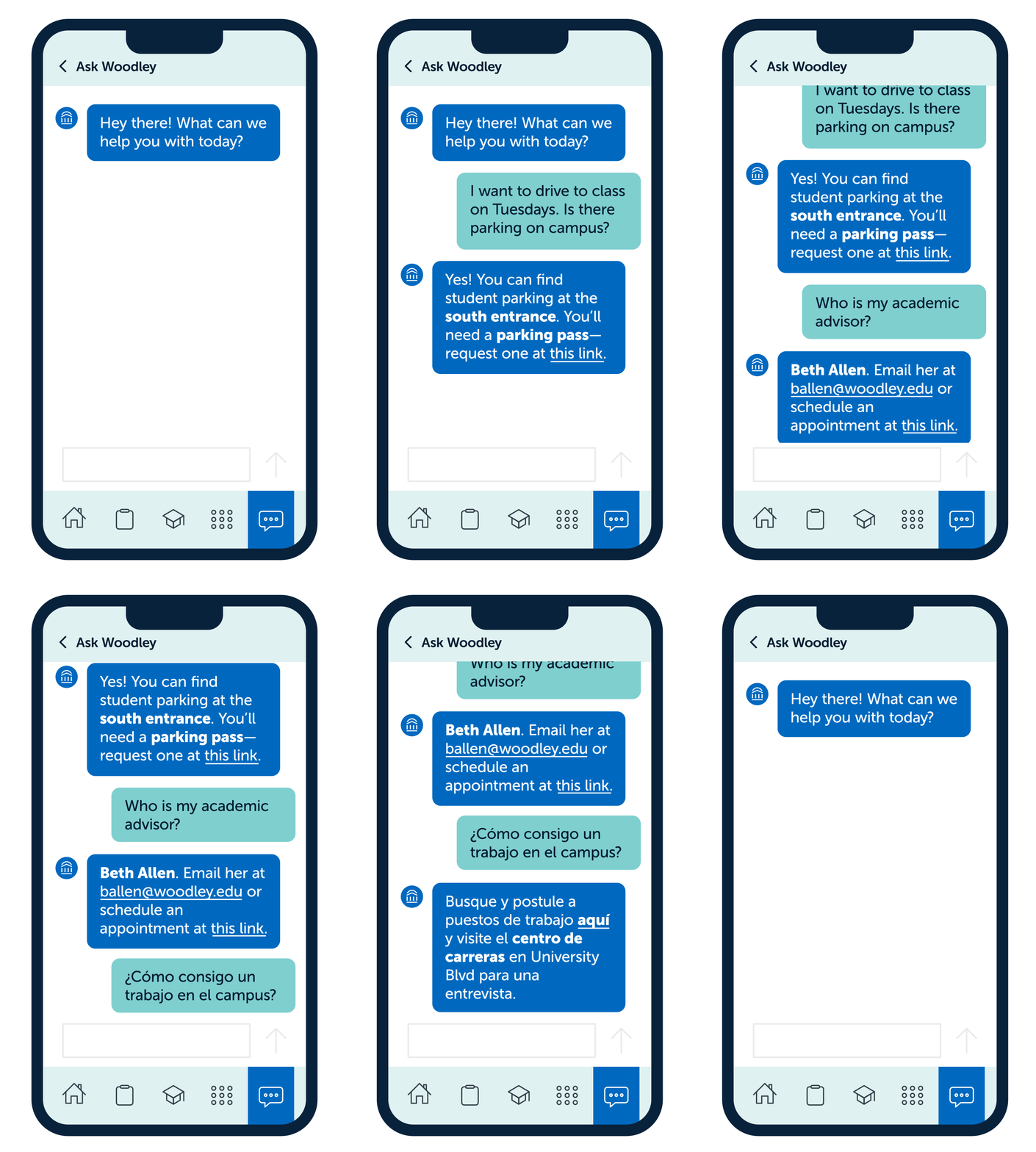
- Answer questions 24/7: AI agents provide immediate answers to common questions about programs, financial aid, registration, and campus resources, helping students move forward even when offices are closed.
- Coordinate care through case management: Bring advisors, faculty, financial aid staff, and student support professionals together in a shared case management workflow so referrals, notes, and interventions happen in one place rather than across multiple systems.
- Turn early signals into action: Combine attendance, appointments, faculty alerts, engagement, and other student signals to identify students who need support and launch proactive outreach before they fall behind.
- Measure what matters: Use natural-language reporting and dashboards to monitor onboarding progress, engagement, completion, and other key outcomes for short-term learners while identifying opportunities to improve program performance.
As interest in short-term credentials continues to grow, community colleges have an opportunity to design student journeys that reflect the pace of these programs while giving every learner the support they need to succeed.
Equip your team for the future of community college student success
New opportunities to improve community college enrollment and retention can be unlocked through proactive interventions, robust data insights, and a compelling value proposition for learners. To learn how EAB’s Navigate360 can help streamline student success interventions and manage prospective student communications, fill out the form below.

More Blogs

Students no longer search like they used to

AI search is reshaping brand and enrollment strategy. Is your institution ready?