Five tips to recruit community college students for this fall (and beyond)
Fall enrollment strategy is less about late-cycle yield tactics and more about early-cycle influence. By the time students are ready to enroll, many of their decisions have already been made. Community colleges that treat fall recruitment as a year-round strategy instead of a seasonal push are far more likely to protect and grow their pipeline.
New EAB research, based on a survey of more than 2,800 high school students considering community college, reveals how today’s prospects are navigating that process—and where traditional recruitment approaches may be falling short. Below, we outline five insights enrollment teams can use to prioritize fall yield while building a stronger pipeline for future terms.
1. If you’re only recruiting juniors and seniors, you’re missing out.
Half of the surveyed students reported beginning their college search before their junior year of high school. While enrollment teams understandably focus much of their effort on juniors and seniors, many younger students are already on your website, researching your tuition, and maybe even submitting inquiries. It’s easy to overlook or deprioritize these younger students as you are trying to guide more “near-term” students through to the start of the semester—but this could threaten your downstream enrollment.
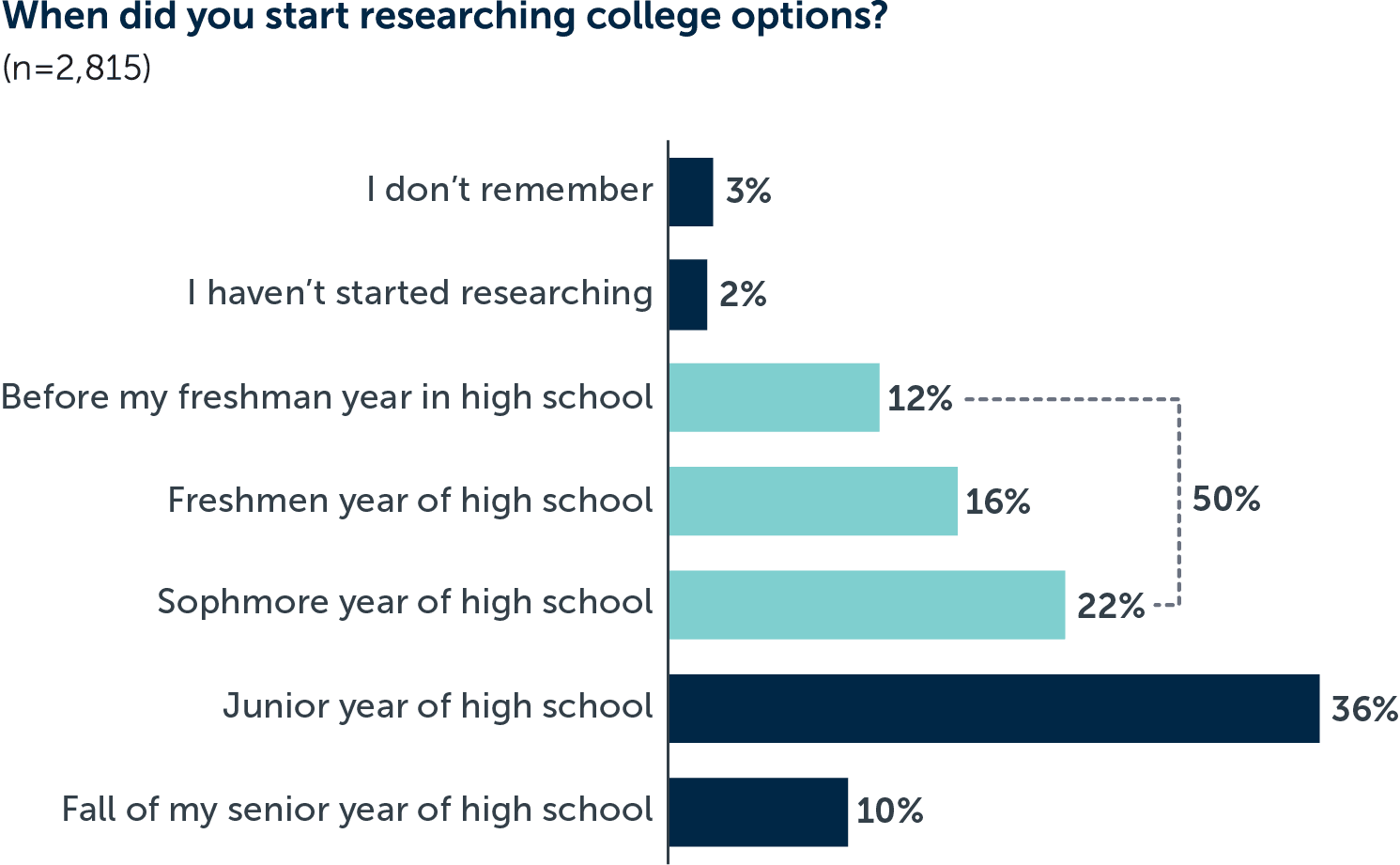
What this means for fall recruiting:
By the time students reach their senior year, many already have a mental shortlist or have ruled out institutions that never appeared early in their search. One way community colleges can stand out with students nearing graduation, even those who have done extensive research, is by packaging financial aid as early as possible so your offer is considered alongside those from other institutions.
Dual enrollment students are another key audience, and even if they are well into their research process, colleges can still break through by clearly articulating how earned credits count toward an associate degree and transfer seamlessly to a four-year institution.
What this means for future recruiting:
When students first encounter your institution as high school freshmen or sophomores, they are more likely to recognize and trust it later, even if enrollment is still a few years away. Simple steps like engaging early-interest and dual-enrollment students, hosting events specifically for younger prospects, and building familiarity through noncredit youth programs can help colleges show up earlier in students’ decision-making processes.
Key recommendations:
- Continue supporting near-term prospects with clear next steps, while recognizing that some students in your pipeline may not be enrolling until a later term
- Ensure early-interest students, including dual enrollment participants and information requesters, remain engaged through consistent, low-pressure outreach
- Treat fall recruitment as both a yield effort and a relationship-building moment for students earlier in the pipeline. Invite downstream prospects to open houses, financial aid events, and tours to build ongoing relationships
2. Most community college prospects are also considering four-year options.
Even when students are actively considering community college, 84% are also exploring four-year options. As more four-year institutions entice students by waiving application fees, adopting test-optional policies, and highlighting alumni success, community colleges need to recognize that competition increasingly spans sectors and adjust their recruitment approach to highlight what makes their college different. This “shopping around” isn’t necessarily a drawback. It can actually be an opportunity to show how your college might be a better fit than a four-year institution when compared side by side.
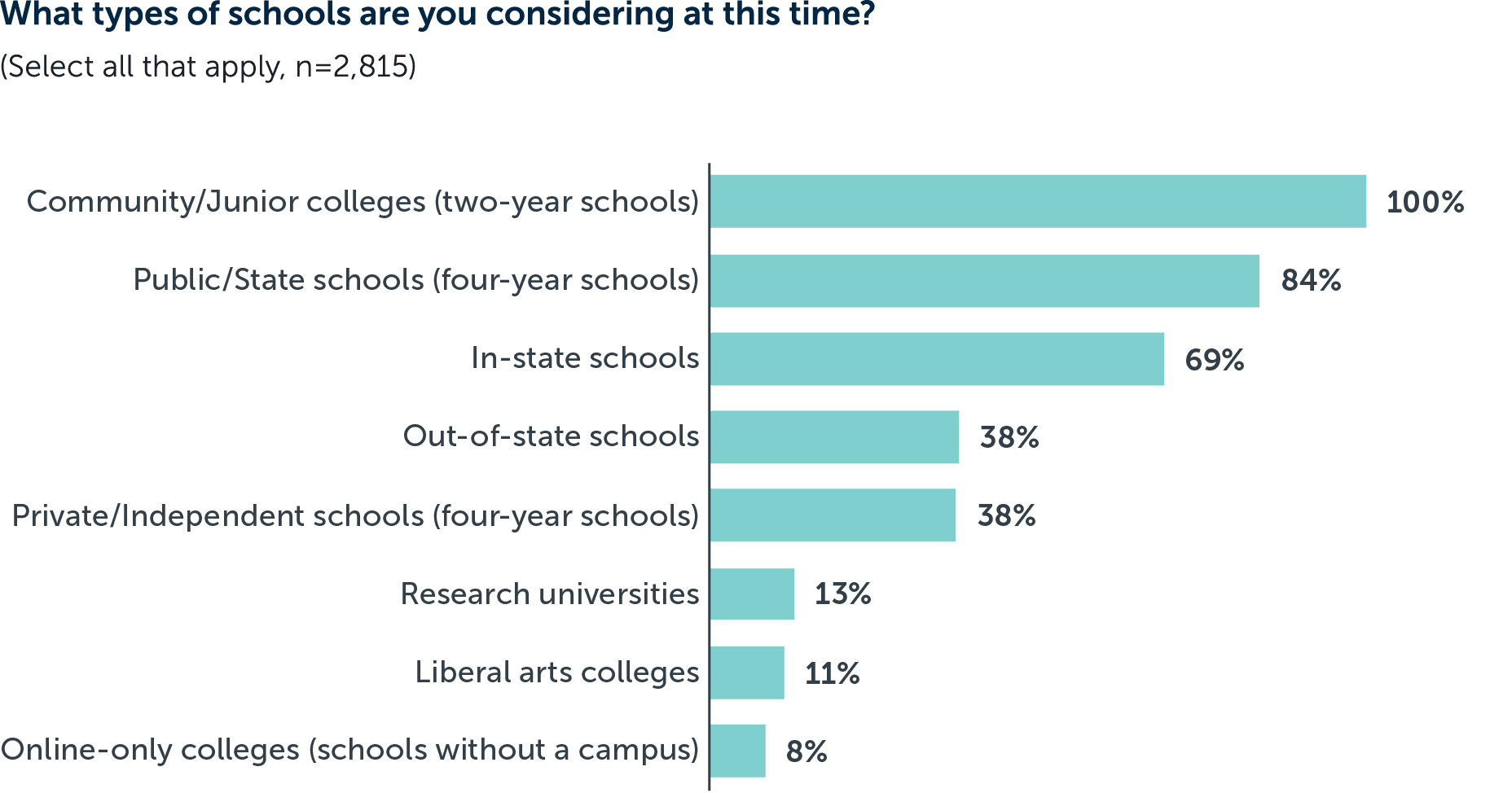
What this means for fall recruiting:
Late-stage prospects may still be weighing community college against four-year options, so it’s important to recognize that an application doesn’t necessarily signal a firm commitment. Even after applying, students still need clear, compelling information that motivates them to choose your college. For students considering four-year options, asking about their career goals and other schools they are exploring, while highlighting clear transfer pathways, can help them see how community college supports their long-term plans, often with significant cost savings.
What this means for future recruiting:
Competition across sectors is likely to intensify as demographic shifts reshape the college-going population. As students begin comparing options earlier in their search, institutions that clearly communicate their value, including affordability, flexibility, and outcomes, will be more likely to stand out. Transfer pathways, short-term credentials, skilled trades, and apprenticeships are all ways that two-year colleges can stand out in a highly competitive market.
Key recommendations:
- Clearly communicate what differentiates your institution, including flexibility, affordability, unique programs, and transfer pathways
- For students pursuing a bachelor’s degree, frame community college as a strategic starting point rather than a compromise
- Make transfer agreements and 2+2 pathways easy to understand and find
3. Students are focused on value, not just price.
Cost remains a major factor in college decision-making, but it is not the only concern driving student anxiety. Prospective community college students are also thinking carefully about job outcomes and whether they are making the right long-term choice. In our survey, when asked what makes them nervous about college:
- 27% of students said they were concerned about making the right choice for their future
- 24% said they were nervous about getting a job after graduation
What this means for fall recruiting:
Students deciding where to enroll this fall are often comparing institutions on career outcomes, not just affordability. They want reassurance that their choice leads to tangible outcomes, whether that is a job, a transfer opportunity, or both. Messaging that focuses only on cost may leave critical questions unanswered.
What this means for future recruiting:
Concern about outcomes is unlikely to fade, especially as more employers move away from requiring degrees. Students earlier in the funnel are already thinking about careers and long-term stability, sometimes years before enrollment. Institutions that clearly connect programs to outcomes early in the search process may be better positioned in future recruitment cycles.
Key recommendations:
- Pair affordability messaging with clear explanations of career pathways, transfer options, and alumni outcomes
- Help students see how programs connect to internships, credentials, and employer demand
- Acknowledge uncertainty and position your institution as a supportive guide rather than just a lower-cost option
4. Prospects often enter your website through “side doors,” not admissions pages.
When prospective students visit college websites, they don’t always start on an admissions page, even though that’s where we think they may begin. In our survey, when asked what information prospective students were looking for when visiting college websites:
- 81% said cost and affordability
- 77% said programs
- 66% said financial support
- 62% said admissions
If information and next steps for prospective students are only on the admissions page, colleges may miss important opportunities to engage students who are already exploring the site through these “side doors”. These high-traffic areas should be treated as a place to connect with prospective students, not just current ones.
What this means for fall recruiting:
Students close to enrolling may revisit these pages multiple times as they finalize their decisions and move through the onboarding process. Ensuring that AI-powered supports, such as Navigate360’s chat agent, are available on high-traffic pages can help students get instant answers to their questions and increase the likelihood that they will enroll.
What this means for future recruiting:
Ensure that request-for-information forms, links to your application, and admissions information appear in high-traffic areas so you can capture as many prospective students as possible. Once captured, those students need to be placed into highly personalized communications flows that keep them connected to the college.
Key recommendations:
- Review high-traffic pages to ensure information is clear, current, and easy to act on
- Make it simple for students to request information or get answers without navigating multiple pages
- Consider how real-time support, like AI chat agents, can help prospective students move forward when questions arise
5. Email still anchors student communication—when done well.
Despite common assumptions that younger students have moved on from their inboxes, email remains a primary communication channel. Seventy-one percent of prospective community college students say they prefer email, and 84% open their inbox at least once a day. Students rely on email to gather information, track next steps, and stay informed throughout the search process. While other channels play an important role, email continues to anchor student communication preferences. The key is making sure we are sending them messages that are easy to understand, tailored, and have clear calls to action.
What this means for fall recruiting:
Poorly coordinated or overly frequent outreach can overwhelm students, cause confusion, and actually increase the number of questions students have, rather than decreasing them. Audit your communications plan, and consider how AI tools, like the AI content creator in Navigate360’s Enrollment CRM, can make writing emails fast, personalized, and thoughtful.
What this means for future recruiting:
Consistent email messaging helps build trust and familiarity well before application or enrollment. Developing “warming” communication plans for students further down the funnel, with messaging that stays engaging without becoming overwhelming, can help maintain momentum and keep students moving forward. This messaging should also include clear calls to action, such as asking whether they are still interested in the college, which programs they are considering, and whether they plan to transfer.
Key recommendations:
- Use email to answer common questions, clarify next steps, and reduce friction in the enrollment process
- Support email outreach with personalized letters, mobile-friendly content, and timely text reminders. For example, you can text students to let them know you sent them an email.
- Coordinate messaging across channels so students receive reinforcement rather than repetition
Empower Your Team With an Enrollment CRM Designed for Community Colleges
EAB partners with community colleges to combine research on student behavior with practical tools that help teams prioritize outreach, personalize communication, and respond quickly when students need support. Through the Navigate360 Enrollment CRM, institutions can engage students earlier, better support student onboarding, and build recruitment strategies that extend beyond a single fall cycle. For more information, complete this form.

More Blogs

Marketing teams are stretched thin. Here’s what the data says to do next.

5 steps graduate enrollment teams can take to reduce manual work