4 questions domestic students will ask before applying to your graduate program
This year, we saw the first real dip in international graduate enrollment since the pandemic, due in large part to immigration and travel restrictions imposed by the administration. A strong domestic graduate enrollment strategy is no longer a temporary focus but a long-term priority as competition for the domestic pool continues to intensify. Both schools that have historically relied on global audiences and those that have always focused on domestic students alike are setting their sights on domestic audiences. Winning domestic enrollments starts with understanding what U.S. students want, what turns them away, and what they need to feel confident in enrolling.
Here are four key questions domestic students ask themselves before they consider applying to your graduate, online, or other adult-serving programs, based on a survey of over 8,000 graduate and adult learners.
1. Can I afford this?
Cost of attendance is the most important factor in domestic students’ enrollment decisions, and more than half say they are looking for information about cost first when they visit a university website. Yet many program pages still require prospective students to click through several pages before finding tuition, fees, or a realistic estimate of the full cost of attendance.
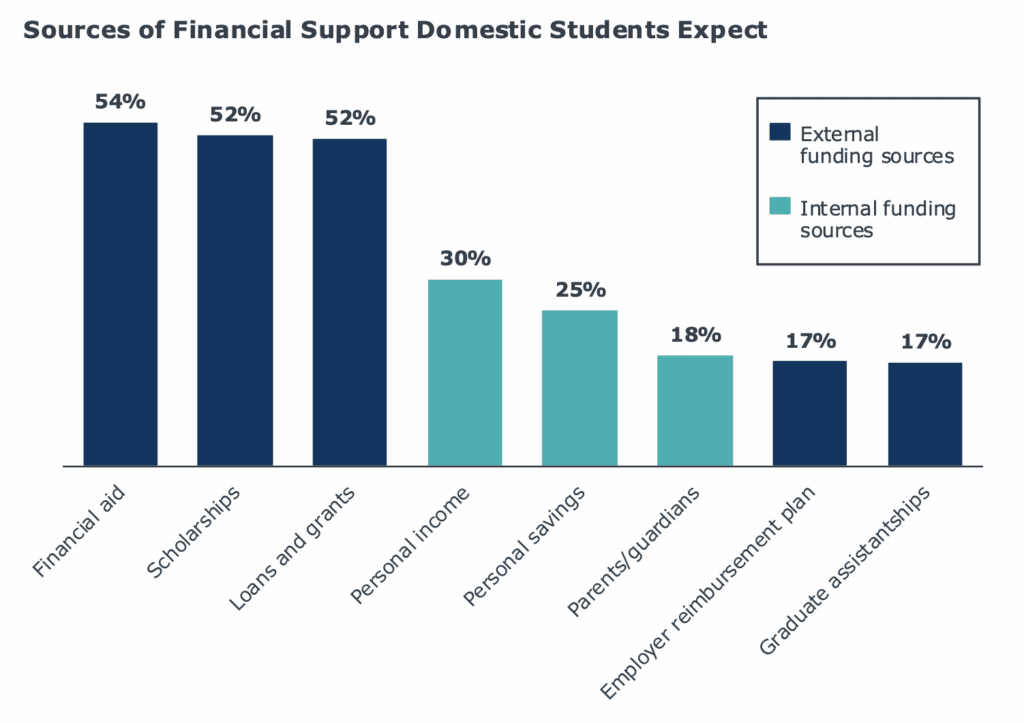
You can reduce this friction by placing a single, scannable cost block on every program page. This block should clearly outline tuition, typical fees, any required travel or residency expenses, and opportunities to lower the cost through transfer credit, employer partnerships, scholarships, or prior learning assessment. With nearly half of U.S.-based survey respondents expecting to rely on financial aid, scholarships, loans, or grants to fund their education, institutions need to provide additional clarity by explaining how these different forms of aid are awarded.
2. Will this program work for me?
Domestic students approach their program search with specific questions, often leading to accelerated search timelines. Nearly half of surveyed domestic students research programs for less than six months, compared to just 31% of international students. After cost, domestic students are browsing school websites to understand program offerings. The majority of domestic students prefer hybrid classes, and those who prefer online classes (32%) want an asynchronous format. Most students considering in-person programs (22%) are unwilling to commute more than 30 minutes each way—nearly a third even remove schools from their consideration list if they are too far from home.

For domestic students, flexibility is a significant factor in program fit. They want to understand right away whether a program’s schedule and requirements can be easily integrated into their existing responsibilities. When institutions bury details about schedules, time commitments, or in-person requirements, stealthy domestic students will rarely raise their hand to ask for clarification. Instead, they quietly remove your program from their consideration list.
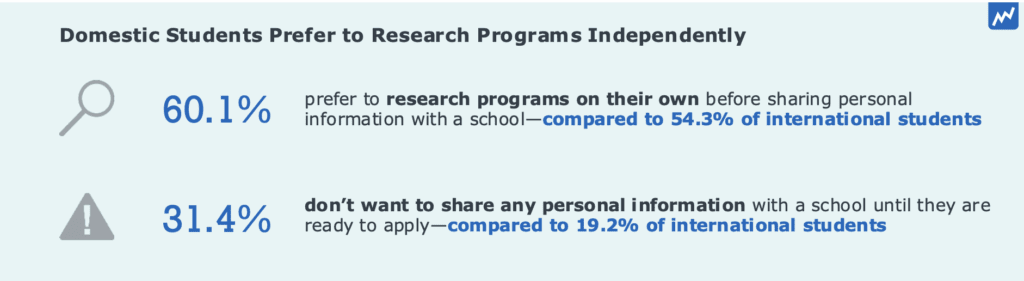
Clear, specific messaging about program modality is especially important. If a program is hybrid, institutions should describe exactly what that looks like. If courses are online, institutions should clarify whether the program is synchronous, asynchronous, or mixed. And because so many domestic students shop anonymously, this information needs to be visible on your site before a prospect ever decides to share their name and information.
3. How will this program benefit me?
Once a student determines that a program fits with their lifestyle and is financially feasible, they turn immediately to value. For domestic students, value is often associated with practical and career-based outcomes. Students most often return to school to advance their career and/or increase their earning potential, and career services score a 3.81 out of 5 in importance.
This is an area where you can stand out from competitors. Showing how program features lead to real outcomes—using alumni stories about promotions, salary increases, new skills, and career transitions—can be especially compelling to prospective students. Pairing cost and career outcomes side by side is especially powerful. When students can see the connection between the investment in and return from your program, they are far more likely to stay engaged and believe in the value of furthering their education.
4. Is this a reputable, quality program?
Program quality matters deeply to domestic graduate students. Program accreditation is the top indicator of program value for this audience and is tied with cost as the most important factor in domestic students’ enrollment decisions.
Beyond accreditation, domestic adults want information about faculty expertise and a program’s reputation. Schools that highlight faculty credentials, industry experience, and research accomplishments create trust and signal that students will learn from people who understand the realities of their field.
International enrollment may recover eventually, but in the meantime, domestic students will be an even more important part of your graduate enrollment strategy. Schools that meet students’ needs for fit, affordability, value, and quality will have an advantage in the competitive and crowded race for domestic enrollments.

More Blogs

Marketing teams are stretched thin. Here’s what the data says to do next.

The big bets that actually drive online enrollment growth