How to use state demand data to launch or revitalize programs
When designing new academic programs, faculty and institutional leaders often fall back on the familiar: develop a specialization in my research area, add a prestigious terminal degree in our field, and see what our peers have been developing. And in conversations to improve existing programs, the path is similar—or concludes that, if just given additional resources, a program could be more successful. These stagnant approaches can lead to programs that are misaligned with student needs and market demand.
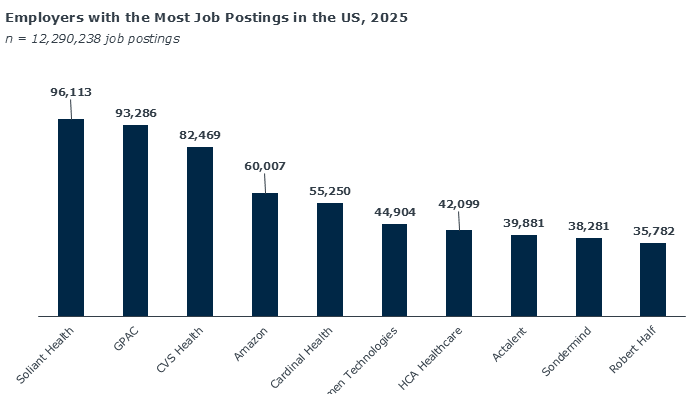
Each year, our Professional and Adult Education Advisory Services team analyzes statewide employer demand data. This informs state demand profiles with the top requested skills, employers with greatest demand, and most frequently posted occupations for each state.
Beyond the data, the state demand profiles offer discussion questions and guidance for how to use the data, plus insight into select data points where numbers alone do not tell the whole story.
Read on for three ways to leverage our 2025 employer demand data in program decision-making—and don’t forget to check out the demand profile for your state.
1. Leverage labor intelligence to identify and motivate employer partners
Labor market intel allows universities to approach prospective employer partners with a more granular understanding of potential training and educational needs. Employer partners can offer:
- Insight into nuanced needs via program advisory boards
- Access to high-potential audiences in need of education
- Opportunities for current students’ experiential learning and alumni employment
2. Reposition and scale existing programs
Refreshing existing programs can help maximize investments already made in programs with the potential to grow. For example, ensure your programs are conferring the skills employers seek most, like project management. While project management skills are often requested in directly aligned occupations such as Project Management Specialists, these skills are increasingly requested within other occupations such as Construction Managers, Marketing Managers, Software Developers, and Civil Engineers. Common job titles seeking project management skills include Business Analysts, Account Managers, and Manufacturing Engineers.
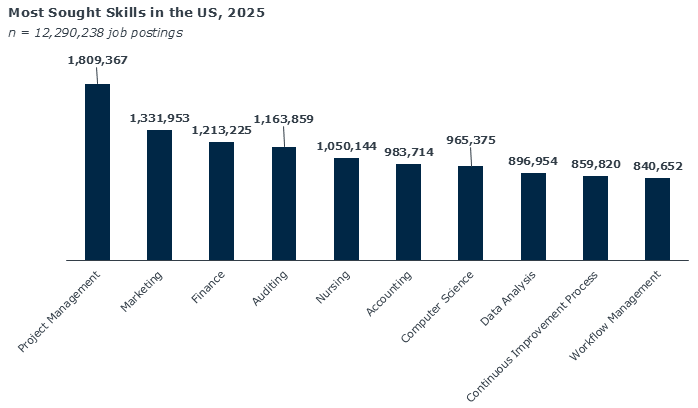
To improve your programs, consider adding project management courses or concentrations into programs. Below are concentration/certificate ideas based on degree topic:
- Engineering and Technology: IT Project Management, Engineering Project Management, Construction Project Management
- Business: Marketing Management, MBA with a Project Management Concentration, Non-Profit Management, Project Management for Finance Professionals
- Liberal Arts: Arts Management, Event and Production Management, Media Production and Project Management
- Health Sciences: Biotechnology Project Management, Health Care Project Management, Clinical Study Management
3. Generate new program ideas aligned to students’ motivations and employers’ needs
Employer demand can also ignite ideas for new offerings. Once discussions have identified gaps between employers’ needs and available offerings, explore what programming could teach those valuable skills and prepare students to enter those hot jobs.
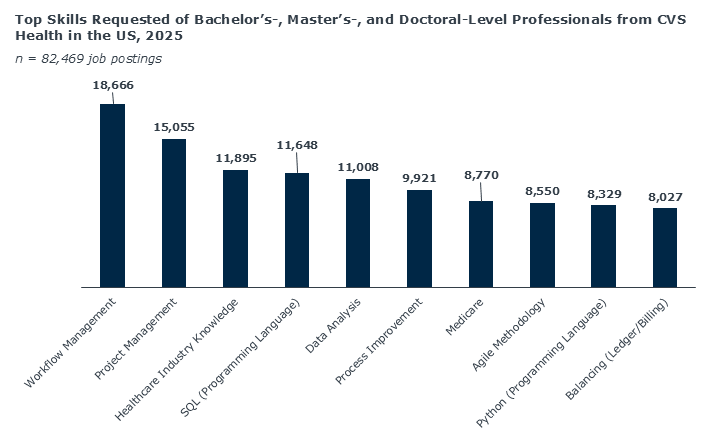
A closer look at job postings from CVS Health
- CVS Health is among the top national employers
- CVS Health sought professionals in a variety of occupations, namely:
- Pharmacists
- Software Developers
- Registered Nurses
- Marketing Managers
- Financial and Investment Analysts
- Data Scientists
- Top skills at CVS Health requested in 2025 from bachelor’s-, master’s-, and doctoral-level professionals nationwide included workflow management, healthcare industry knowledge, and programming languages (e.g., SQL, Python).
- Once discussions have identified gaps between employers’ needs and available offerings, explore what programming could teach these and other in-demand skills to prepare students to enter the workforce. Ask questions like:
- Which programming could incorporate these skills to better prepare students for workforce demands?
- Do our business programs position students to work in a variety of industries, including health services and pharmacies?
- Do our health sciences graduates demonstrate business and technological acumen, in addition to other relevant skills?
- Which programming could incorporate these skills to better prepare students for workforce demands?
- What new credentials could we offer to stay current with the market?
- Could we utilize resources from existing and adjacent programs to build in-demand skills into course offerings?
By using data, leaders of graduate, online, professional, and other adult-serving programs can spark more productive discussions and ultimately achieve more successful launches and robust portfolio development.

More Blogs

The higher ed SEO checklist

Marketing teams are stretched thin. Here’s what the data says to do next.