How to stop fixing graduate and adult enrollment gaps and start preventing them
Choosing a graduate or adult degree completion program isn’t a quick decision for students. For 37% of prospective students, the search alone takes 12 months or more.
Yet most programs cut off outreach to leads after just six months, long before many of those students are ready to act. It’s not a coincidence, then, that 37% of graduate programs failed to meet enrollment goals in 2024.
When institutions don’t align their lead nurture strategy with students’ actual decision timelines, enrollment goals become much harder to hit. Gaps begin to form the moment programs stop engaging prospects who are still weighing their options. By the time those gaps show up in your numbers, the actions that caused them are already months in the past.
Read on to learn how enrollment shortfalls develop, and what programs can do to prevent them before they form.
The two funnel problems driving enrollment gaps
Most enrollment gaps stem from one of two structural issues, each with different symptoms, but the same long-term consequence.
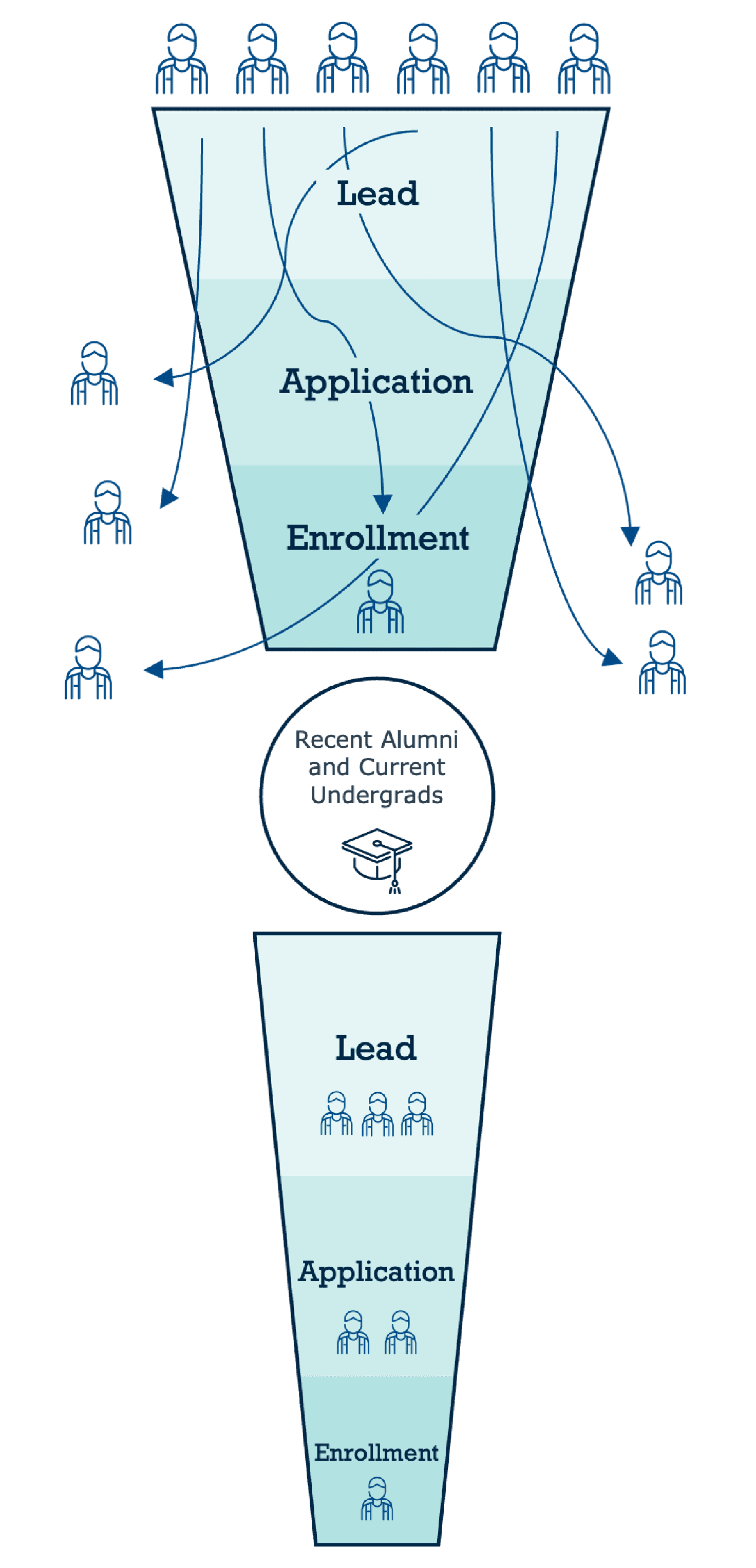
A leaky funnel happens when programs generate strong lead volume but can’t convert those leads to enrollments. Outreach concentrated around deadlines leaves prospects without consistent guidance, and engagement drops off before students are ready to commit, forcing expensive, last-minute recovery efforts.
A narrow funnel is the opposite problem. Strong conversion rates from a small, familiar audience — alumni, current students, branded search traffic, etc. — can mask a pipeline that’s simply too limited to sustain growth. This causes enrollment to plateau over time even when yield looks healthy in a vacuum.
In both cases, the issue isn’t lead volume or conversion rate alone. It’s how the pipeline is built and sustained over time.
Why enrollment gaps start earlier than you think
Most enrollment gaps aren’t the result of poor effort, but rather how lead generation and nurture strategies are structured. When budgets tighten, top-of-funnel investment is often considered as something to cut back on, under the assumption that programs can make up the difference later.
But graduate and adult learners don’t move on institutional timelines. Their decision journeys unfold over months or years. The difference between stable enrollment and persistent gaps is consistency and a lead generation strategy built to last at least 24 months.
How to build a strategy that holds up over time
Closing enrollment gaps before they form requires a shift from reactive tactics to long-term strategy design. Three moves can make a big difference:
-


Plan for long decision timelines
Outreach to prospective students should reflect how they actually search, not just align to upcoming deadlines. Building awareness well ahead of upcoming start terms and aligning messaging to different stages of the decision journey is crucial to maintain student attention. And recognizing that leads may convert across multiple cycles is what separates short-term wins from long-term success.
-

Build a broader, more resilient pipeline
Programs that rely too heavily on known audiences limit their ability to grow. A more diversified lead source mix, with some channels building early awareness and others capturing high-intent prospects such as Appily Advance, creates a more stable foundation. Ensure you are consistently integrating different-in-kind lead sources, rather than only testing new sources when gaps in enrollment begin to show.
-

Stay engaged and adjust early
Prospective graduate and adult students don’t move through the funnel in a predictable way. Programs that cut communication too early risk losing viable candidates before they’re ready to act. Sustained, low-friction engagement over longer timelines keeps prospects connected with your program. In addition, monitoring early indicators, such as engagement metrics, allows teams to course-correct before small issues become major shortfalls.
Enrollment stability is built upstream
When programs miss enrollment targets, the instinct is to focus on late-cycle fixes: more campaigns, more spend, and more urgency. But by that point, it’s typically too late and too costly to make up the difference.
The programs best positioned to hit their goals aren’t necessarily doing more. They’re making necessary pivots early, diversifying their lead sources, and keeping in mind how and when prospective students actually make decisions. For teams looking to reduce enrollment volatility, a structured approach to year-round lead generation starts with closing gaps before they form.

More Blogs

The “4S” challenges reshaping graduate and adult enrollment

How mature is your AI search strategy?