How to talk about college cost before families bring it to the holiday table
When families gather around the holiday table, it can be a pivotal enrollment moment, even though no enrollment professional is sitting there. Students may come to the conversation with little more than a sticker price from their dream school and broad claims about value—and relatives may fill the gaps with assumptions.
In EAB’s recent surveys of more than 30,000 students, seven in ten said they had removed schools from consideration because they seemed too expensive. Families are weighing affordability early, often before they understand aid, total cost, or what the student would receive for that investment.
The good news is you can help families question cost assumptions, compare the whole path rather than just sticker price, and know where to turn for answers. Here’s how.
Anticipate the cost assumptions families are likely to make
Most families start the cost conversation with tuition because it is the easiest number to find. They may assume a lower-tuition institution will be the more affordable option, even before financial aid awards arrive.
Your team can make those comparisons easier, and often more realistic. In your sit-down conversations, show what students are likely to pay after grants and scholarships, break down common expenses beyond tuition, and explain how costs differ across options. In some cases, a private institution may end up costing about the same as, or even less than, a public alternative. Families aren’t likely to come to that conclusion if institutions leave them to do the math themselves.
Debt tends to come up quickly, too. Families may say, “You should not take on any debt.” That may be the right decision for them, but it can still be helpful to ask what a manageable amount of borrowing might look like and what, if anything, would make it feel worthwhile to borrow.
The same goes for starting at a community college and transferring. It can be an excellent and affordable path, but families may want to consider the full plan, including which credits will transfer and how long it could take the student to graduate.
You don’t need to steer families toward one answer. The thing to remember is that early assumptions have a notable impact on final decisions. Helping families understand net price, borrowing options, and the realities of different enrollment pathways can lead to a more thoughtful comparison of their choices.
Help families make sense of college value in a changing job market
Expectations about AI’s impact on the workforce are reshaping how students and families think about the value of a college degree. EAB’s 2026 First-Year Experience Survey found that cost concerns and uncertainty about AI impacts on the workforce are changing perceptions of college value. That uncertainty shows up in questions about majors, careers, and whether a degree will pay off.
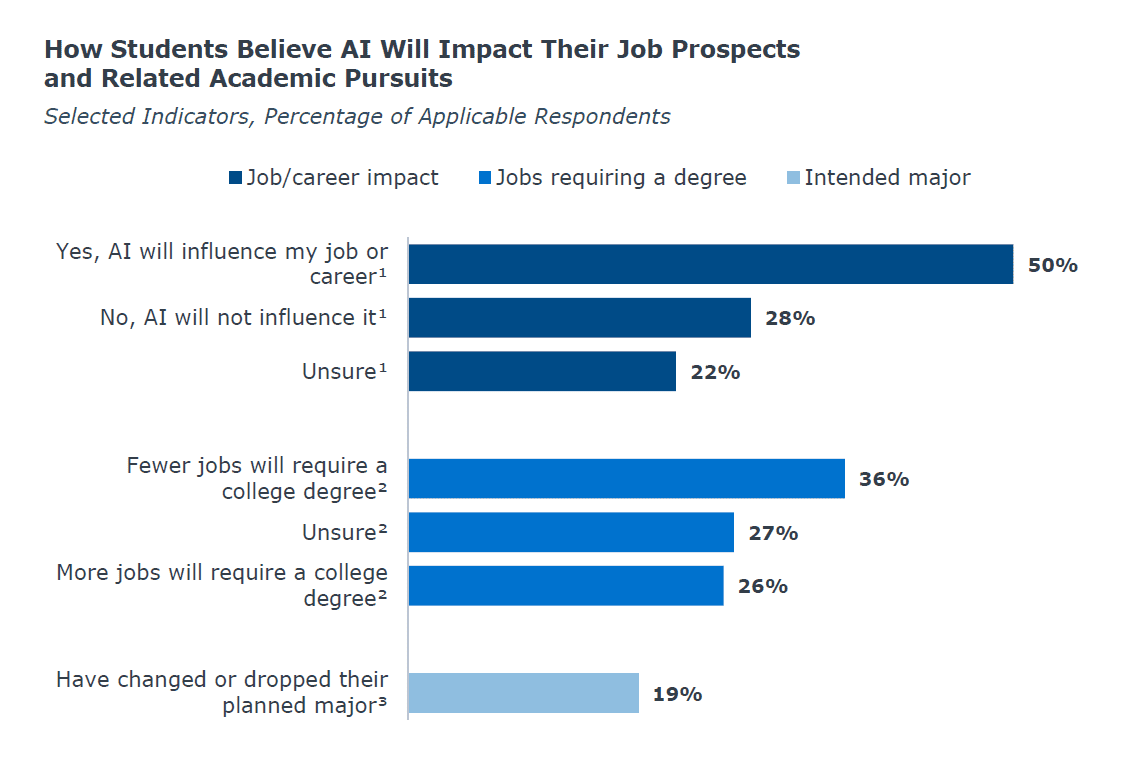
Institutions cannot promise exactly how the job market will evolve, especially as AI continues to reshape entry-level work and the skills employers need. They can show how students become more adaptable to a changing job market through advising, applied learning, internships, faculty relationships, and career preparation. They can also explain how they support students who are still exploring.
A family discussion guide can help students and parents navigate questions about both college costs and future career opportunities. You can keep these on-hand for campus tours, send them via email, and create format-friendly versions for your school’s social accounts. Prompts could include:
- What will attendance cost after grants and scholarships?
- Which expenses should they expect beyond tuition?
- How much debt, if any, are they comfortable taking on?
- What kind of learning environment and support will help students persist through the program?
- Which option offers the most realistic path to completion and outcomes aligned to the student’s values?
The last two questions keep the resource from becoming purely about affordability. A student who needs smaller classes or more structure may struggle where it is easy to feel anonymous. An undecided student may benefit from a first year designed around exploration and advising. If a student spends a year spinning their wheels, some expected savings can disappear.
Families make value judgments like this all the time: I pay for a streaming service because I am a soccer fan and it carries matches I want to watch. Someone who does not care about soccer would choose differently. College is a much larger commitment, but the underlying question is similar: What matters to this student, and what is their family comfortable paying for it?
Put a simple pre-holiday plan in market
The cost and value conversation should not begin when the aid offer arrives. Students are engaging with colleges earlier, and EAB’s recent inquiry analysis from aggregated Appily user data suggests institutions have a wider window to influence how students understand their choices.
- Late October: Publish a family conversation guide. Build one landing page or worksheet around the five questions above. Explain sticker price, net price, and total cost in plain language, then link to the net price calculator, fees, housing, and financial aid contacts. EAB’s website clarity diagnostic offers a useful test: can families find the information, understand it quickly, and trust that it is current?
- Early November: Send separate student and parent messages. Tell students they may get questions about college over the holidays and give them five alternative questions worth discussing first. Frame the parent message around comparing full costs and helping the student identify priorities. Use email for context and SMS for the reminder.
- Before the break: Equip counselors with talking points. When a family says a school is too expensive, counselors can ask whether they are comparing sticker price, net price, or total cost; what level of borrowing feels manageable; and which parts of the experience matter enough to affect the decision. The answers reveal whether the concern is actual cost, fear of debt, or uncertainty about value.
- After the holiday: Ask what came up. “What questions came up when you talked about college?” is more useful than a generic application reminder. Direct families to financial aid office hours, a counselor, or the net price calculator based on what they need.
Give students something useful to bring home
A sales pitch is probably the least helpful thing we can give a student who is worried about cost. Their families are probably going to ask hard questions during the holidays about debt, majors, careers, and whether college will be worth the investment—and they should.
What you can give students is clear information they can bring into those conversations: a realistic picture of what attending your institution would cost after financial aid, what expenses their family should plan for, what support they’ll receive as students, and where they can turn for answers. You can’t make every concern disappear, but you can keep an initial reaction to sticker price from ending the conversation too soon.

More Blogs

What we’ve learned from testing earlier yield engagement

The enrollment game has changed. What still works?
