Why graduate enrollment leaders should measure revenue, not just headcount
Graduate programs are under pressure to grow enrollment, but headcount is not the only indicator of enrollment success. In our recent survey with NAGAP, The Association for Graduate Enrollment Management, half of graduate enrollment leaders said that net tuition revenue (NTR) was a top priority, but for many graduate programs, NTR performance lagged significantly behind headcount performance.
About the survey
To help university leaders understand the graduate enrollment landscape, EAB’s Adult Learner Recruitment team partnered with NAGAP on a series of surveys of graduate enrollment professionals. Conducted between September 2025 and February 2026, the three surveys explored a variety of topics relevant to graduate enrollment leaders, from staffing challenges and the growing use of AI to enrollment outcomes and recruitment tactics.
Twenty-seven percent of respondents said undergraduate enrollment shortfalls influenced their graduate enrollment goals. As institutions look to graduate programs to offset broader enrollment and budget pressures, leaders need to ask a more intentional question: Are we growing in ways that are financially sustainable?
Here are three reasons graduate enrollment leaders should use net tuition revenue to set smarter goals and measure enrollment success.
1. Growth in graduate student headcount can mask financial risk
Many institutions define graduate enrollment success primarily by headcount volume. But headcount growth doesn’t always translate to sufficient revenue growth.
In our survey, 80% of respondents said higher enrollments were a top priority for their unit, and 56% met their headcount goals. Comparatively, about 50% said more net tuition revenue was a top priority, but only 37% met their goal. The fact that some units met their headcount goals but missed the mark on net tuition revenue suggests that these goals may be misaligned. When that happens, headcount metrics alone can be misleading and create financial risk if institutions enroll more students but are not generating more revenue.
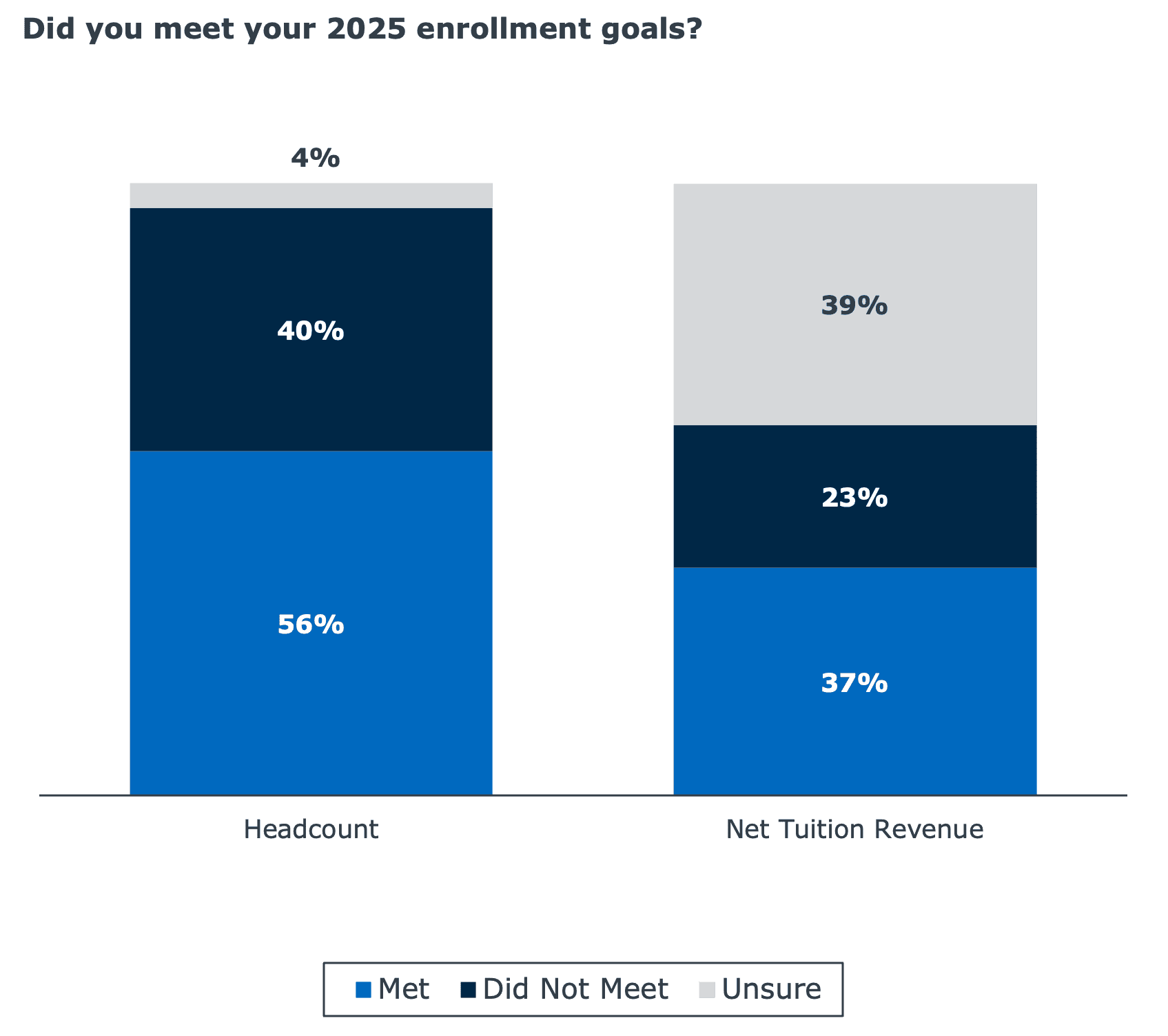
What is especially concerning is that 39% of survey respondents were unsure if they met their NTR goal, a sign that some enrollment teams may not have visibility into the financial impact of enrollments. As graduate revenue becomes more important to universities’ bottom lines, enrollment leaders need visibility into revenue while it is still possible to make strategic marketing and recruitment adjustments. Transparency around net tuition revenue goals and progress, not just headcount, is critical.
2. Graduate enrollment goals should reflect financial realities
Graduate enrollment declined 0.3% from fall 2024 to fall 2025, according to the National Student Clearinghouse. Despite a more challenging market, nearly 50% of surveyed graduate leaders said their enrollment goals increased compared with last year. Higher goals can create pressure among staff to chase growth, adding avoidable stress when not all growth carries the same financial value for the institution.
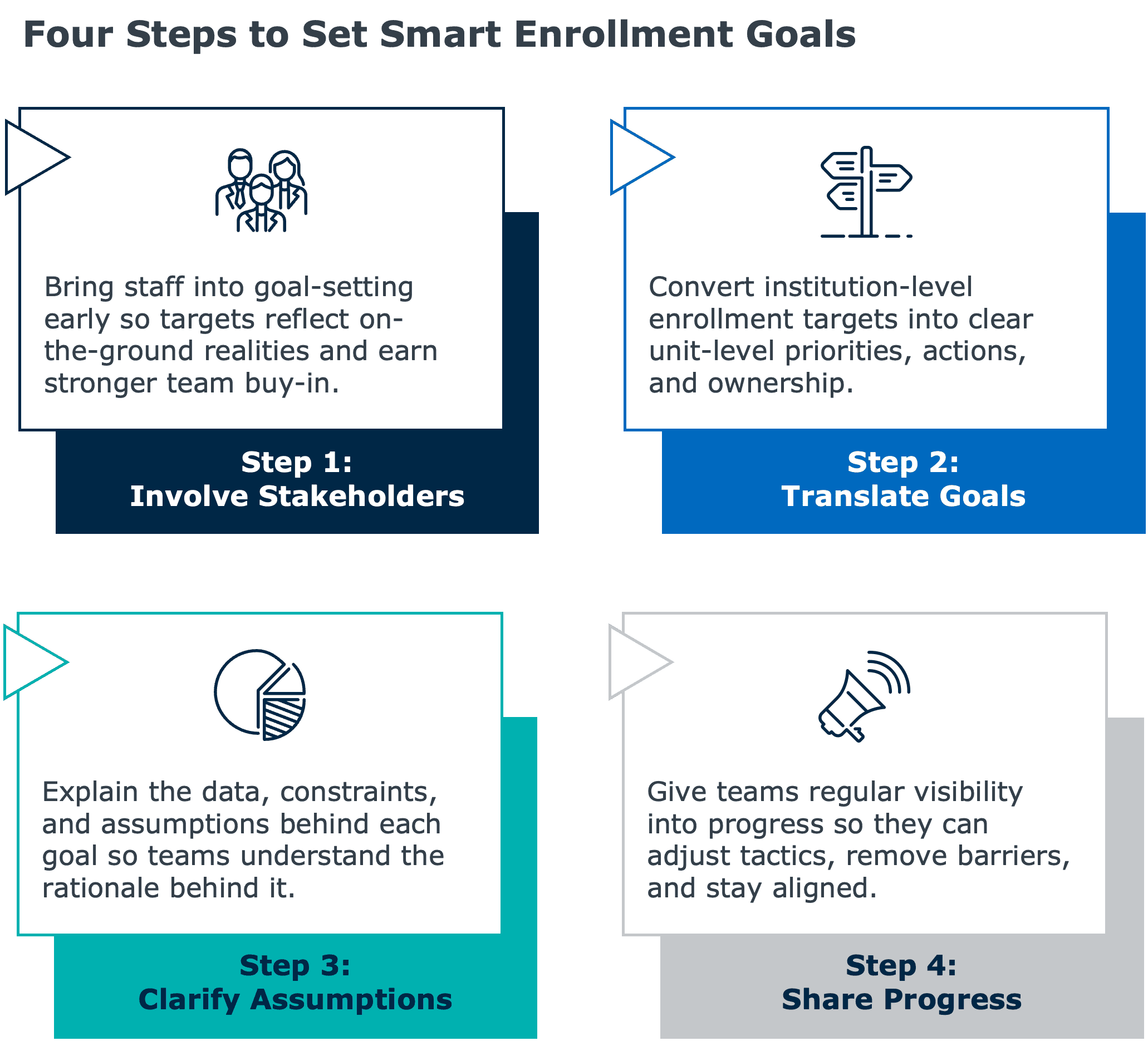
To set goals that set institutions up for financial success, graduate enrollment teams need to understand the numbers they are expected to hit, why those numbers matter, and what assumptions sit behind them.
3. Program growth decisions need to be evaluated through an NTR lens
Surveyed graduate enrollment leaders see the most growth potential in business, STEM, allied health, and nursing programs. But growth potential alone shouldn’t drive investment decisions. Programs in high-demand areas can underperform if they lack a strong recruitment strategy, operational readiness, or a clear and differentiated value proposition for the students they want to serve.
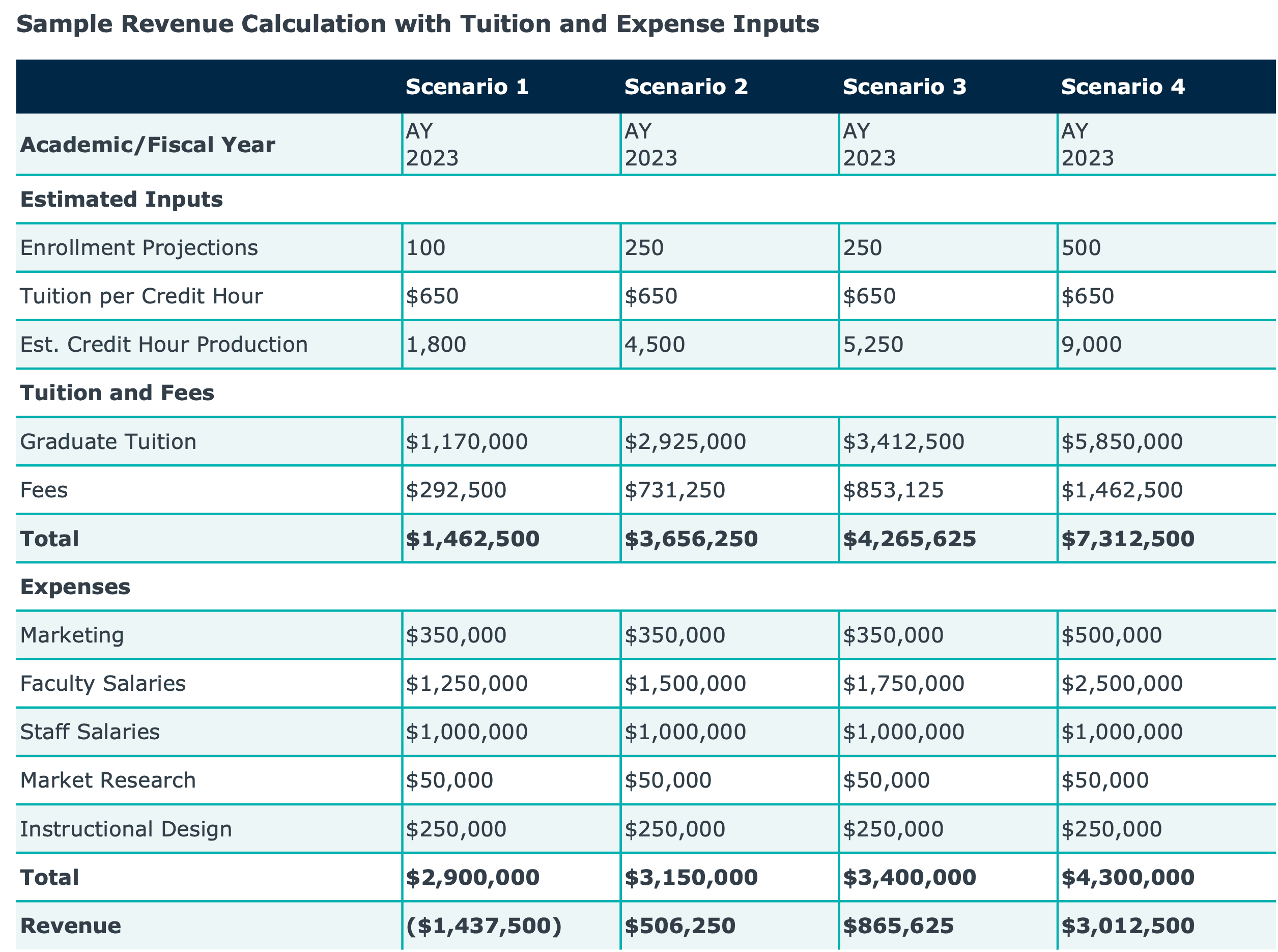
Even a program that increases its headcount can still underperform financially if it relies on heavy discounting or has high delivery costs. A program’s potential NTR should be considered alongside its student and employer demand, institutional fit, operational capacity, competition, and points of differentiation.
See the table below for an example of a simplified financial proforma, a tool for comparing projected expenses against tuition revenue, to ensure you are connecting expenses to growth.
The survey findings reveal that enrollment leaders recognize the importance of growing revenue, but many fell short of their NTR goals. As institutions rely more heavily on graduate programs to stabilize revenue, leaders need to take a closer look at whether their goals, programs, and growth strategies align with the institution’s financial future.

More Blogs

The higher ed SEO checklist

Marketing teams are stretched thin. Here’s what the data says to do next.